Recovery after a stroke
Recovery after a stroke varies greatly from person to person. Some people recover largely within a few months, while others experience long-term limitations. The symptoms that remain depend, among other things, on the location and severity of the brain injury.
Rehabilitation may include:
- Physiotherapy
- Occupational therapy
- Speech therapy
- Exercise therapy
- Guidance from a rehabilitation physician
During rehabilitation, the focus is on improving strength, coordination, balance, and the ability to perform everyday activities.
When can a brace help?
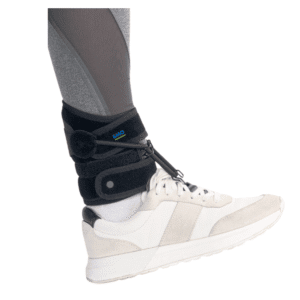
After a stroke, muscle control may be temporarily or permanently reduced. A brace or other orthopaedic aid can, as part of a treatment or rehabilitation plan, provide support when performing daily activities. Depending on the symptoms, a brace may help to:
- Provide better support for joints
- Promote a safer walking pattern
- Reduce overloading
- Make everyday activities easier
- Improve comfort during movement
Which brace or aid is most suitable depends on the nature of the symptoms and should preferably be chosen in consultation with a doctor, physiotherapist, or occupational therapist.
Supportive products after a stroke
Important: A stroke always requires assessment and treatment by a doctor or medical specialist. Products such as braces, splints, and compression garments are not a treatment for a stroke itself, but they may provide support during rehabilitation or help manage long-term physical limitations when recommended by a doctor, physiotherapist, or occupational therapist.
Depending on the symptoms, the following products may be suitable:
Are you experiencing a specific complaint after a stroke? You may also find our information pages on foot drop, shoulder conditions, wrist conditions, and hand conditions helpful, where you can learn more about symptoms, treatment options, and supportive products.