What Is a Torn Ankle Ligament?
The ankle is made up of three bones: the fibula, tibia and talus. The tibia and fibula together form the ankle mortise. The talus sits between these bones and forms the upper ankle joint. The two protruding bone parts of the ankle mortise are called the malleoli. The ankle ligaments run over these malleoli. These ligaments are strong, firm connective-tissue bands surrounding the ankle.
A torn ankle ligament occurs when the foot tilts beyond its normal range. This often causes intense pain and a noticeable egg-shaped swelling on the outside of the ankle.
Cause of Torn Ankle Ligaments
When the ankle makes an unexpected movement and tilts further than its maximum range, the ligaments are overstretched. If the tension becomes too great, the ligaments can tear.
Torn ankle ligaments may occur in various situations: stepping off a curb, landing incorrectly from a jump, twisting the ankle in a hole, or making a misstep during daily activities.
Symptoms of Torn Ankle Ligaments
- Swelling of the ankle
- An egg-shaped lump on the outside of the ankle
- Bruising (purple discoloration just below the ankle)
- Severe pain when moving the ankle
- Inability to stand on the foot
- Inability to walk on the foot
Treatment of Torn Ankle Ligaments
Cool the ankle with ice but note: icing is only effective within the first 30 minutes after the injury occurs.
Afterward, the priority is reducing pain and swelling to minimize intra-articular pressure. This can be done by elevating the foot and giving the ankle rest. In the first days, you will likely need to use crutches to avoid putting weight on the joint.
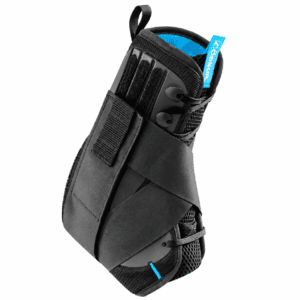
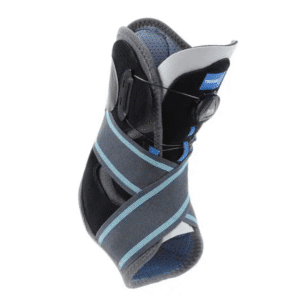
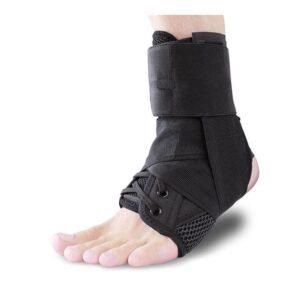
A few days later, the swelling will start to decrease. As the swelling reduces, the ankle must gradually begin to recover. Full recovery may take 4–7 weeks. During this period, using an ankle brace can provide support. Braces and ankle supports help stabilize the joint throughout the healing process.