What Is a Lumbar Herniated Disc?
A lumbar herniated disc is the most common type of herniated disc and develops in the lower back, usually between the lowest lumbar vertebra and the sacrum. Between the vertebrae are intervertebral discs that act as shock absorbers. When the soft inner core of a disc bulges outward, it can put pressure on a nearby nerve. This may cause lower back pain, pain radiating into the leg, and sometimes tingling, numbness, or muscle weakness.
The severity of symptoms varies from person to person. Some people only experience lower back pain, while others have difficulty walking or sitting for extended periods. Although a lumbar herniated disc can be very painful, many people recover without surgery.
Lower Back Pain Radiating to the Leg
Do you have lower back pain that radiates into your buttock, thigh, lower leg, or even your foot? A lumbar herniated disc may be the cause. When a nerve becomes compressed, pain can travel along the course of that nerve. Besides pain, you may also experience tingling, numbness, or reduced strength in the affected leg.
Symptoms often worsen while sitting for long periods, bending forward, lifting, coughing, or sneezing. This combination of lower back pain and radiating nerve pain is characteristic of a lumbar herniated disc.
Causes of a Lumbar Herniated Disc
A lumbar herniated disc can develop suddenly or gradually. Only a small percentage occur acutely, for example after a fall or an awkward movement that places excessive strain on the lower back. This may immediately cause sharp pain radiating into the leg.
More commonly, a herniated disc develops gradually. As we age, the intervertebral discs lose moisture and become less flexible. Small tears can develop in the outer layer of the disc, allowing the soft inner core to bulge outward and press against a nerve.
Although lumbar herniated discs are most common in people between the ages of 20 and 40, age-related wear of the intervertebral discs becomes more common as people get older.
Symptoms of a Lumbar Herniated Disc
The symptoms depend on which nerve is affected. Some people mainly experience lower back pain, while others suffer primarily from radiating pain or neurological symptoms.
- Lower back pain
- Pain radiating to the buttock, thigh, lower leg, or foot
- Tingling or numbness in the leg
- Reduced strength in the leg or foot
- Pain that worsens when sitting, bending, coughing, or sneezing
- Periods with few symptoms alternating with episodes of severe pain
Diagnosing a Lumbar Herniated Disc
Based on your symptoms and a physical examination, a doctor can determine whether a lumbar herniated disc is likely. This examination may include checking your muscle strength, sensation, and reflexes.
If further examination is needed, an MRI scan may be performed. This can clearly show whether an intervertebral disc is pressing on a nerve. An X-ray does not show the intervertebral discs themselves, but it may be used to rule out other causes of your symptoms.
Treatment and Recovery
In most cases, a lumbar herniated disc heals without surgery. The body can gradually break down the protruding disc tissue, reducing the pressure on the affected nerve. This process may take several weeks or months.
During recovery, it is important to remain active within your pain limits. Prolonged bed rest is generally discouraged, as it may delay recovery. A physical therapist can provide exercises to strengthen the back muscles and reduce strain on the lower back.
If the symptoms are severe or neurological problems develop, surgery may be necessary. Your treating physician will discuss which treatment is most appropriate for your situation.
Support with a Back Brace
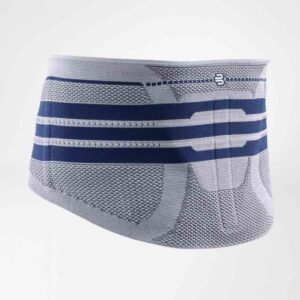
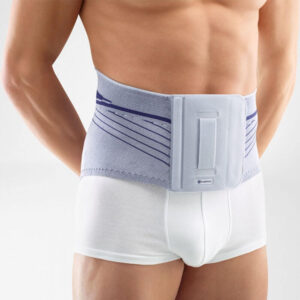
A back brace can provide temporary additional support and stability to the lower back. This reduces strain on the muscles and joints during daily activities such as walking, standing, or light work. It may provide greater comfort when movement is painful.
A back brace does not heal a herniated disc, but it can provide support during recovery or when you temporarily need additional stability. It is important that the back brace fits properly and provides sufficient support without unnecessarily restricting your freedom of movement.
What Should You Consider When Choosing a Back Brace?
- Sufficient support for the lower back.
- A comfortable and close-fitting design.
- Breathable material for prolonged wearing comfort.
- Easy adjustment for the correct level of compression.