When is your ankle broken?
It can happen that during sports or daily activities you accidentally experience a hard impact. As a reflex, you try to catch yourself with your hands and feet. However, the forces acting on the hands and feet can be so great that the bones give way.
An ankle fracture occurs when one or more bones in the ankle joint are broken. The bone can break in one or multiple places. A fracture may be a complete break or a crack in the bone. A common ankle fracture involves the fibula, which is located on the outer side of the ankle joint.
There are different classifications for the severity of an ankle fracture. When the bone fragments remain aligned, this is referred to as a stable fracture. In other cases, the bones may be displaced. In severe cases, a bone may protrude through the skin; this is known as an open fracture.
Cause of an ankle fracture
In most cases, an ankle fracture occurs as a result of a fall or an accident. A fracture can be caused by a strong external force, such as a kick or a blow.
An ankle fracture can also occur due to an unexpected twisting movement of the joint, for example when the body turns while the foot remains firmly planted on the ground.
What are the symptoms of a broken ankle?
- Severe pain immediately after the injury
- Visible swelling and bruising
- Inability to stand or walk on the ankle
- Deformity or abnormal movement of the ankle
- A cracking sensation or sound at the moment of injury
Diagnosis of a broken ankle
The diagnosis is made based on the pattern of symptoms, physical examination, and X-rays. The doctor examines the alignment of the ankle, swelling, bruising, and tenderness. The X-ray shows the type of fracture and whether there is any displacement.
Treatment and recovery of a broken ankle
Once it is determined that the ankle is painful and can hardly be moved, you should see a doctor. The doctor will refer you to a hospital where X-rays can confirm the fracture. In most cases, the fracture is set and immobilized with a cast. If the fracture is severe, surgery may be required.
After the cast is removed, the bones and muscles need time to recover. Muscle strength and quality may have decreased. With the help of a physiotherapist, exercises can be performed. Recovery can also be accelerated by using a brace. A brace provides firmness and stability around the ankle joint. It may also still be needed after rehabilitation because the joint can remain less stable than before.
Supportive ankle brace for a broken ankle
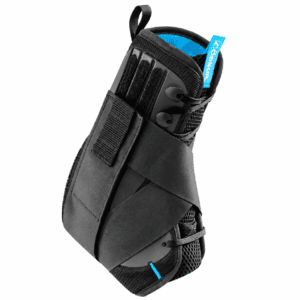
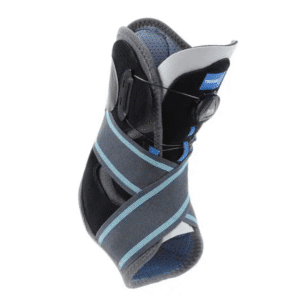
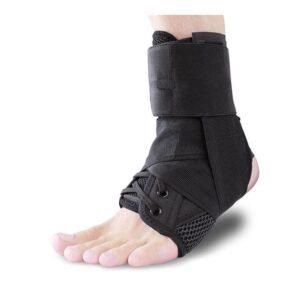
An ankle brace provides support and stability to the ankle after a fracture, especially during the rehabilitation phase after a cast or surgery. The brace limits unwanted movements, reduces pain, and promotes safe recovery. Wearing a brace allows you to start walking and performing daily activities more quickly and safely.
Which braces are suitable for a broken ankle?
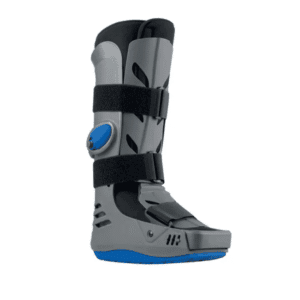
For a broken ankle, special braces and walkers are available to stabilize and protect the ankle during recovery. Suitable braces are adjustable, sturdy, and comfortable, ensuring a proper fit and sufficient support. Consult a ProBrace specialist to choose the right brace. An ankle brace can be particularly helpful for fractures that cannot be casted or in the period after the cast has been removed.