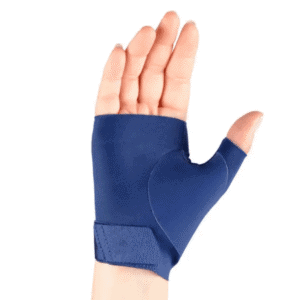
Osteoarthritis in the thumb?
Osteoarthritis in the thumb is a rheumatic condition that can occur throughout the body. It is often thought that osteoarthritis is simply wear and tear of the joints or bones. This is why you may often hear people say: “My joints or fingers are worn out?!” However, the term “worn out” is not entirely accurate. In the joints, a so-called change has occurred.
An extra piece of insight: a joint is a connection between two bones. On the joint surface of the bone sits cartilage. Cartilage is a smooth tissue that allows the joint to move smoothly. In thumb osteoarthritis, this cartilage is deformed; it has become thinner and softer. This causes the joints to move less easily, making movements in the fingers painful and stiff — that is osteoarthritis of the thumb.
Symptoms of thumb osteoarthritis brace
- Stiffness in the thumb
- Swollen thumb
- Painful and sensitive thumb
- Limited movement in the thumb joint
- A “knobby” appearance
What causes thumb osteoarthritis?
Thumb osteoarthritis usually develops due to a combination of natural wear and tear, genetic predisposition, and prolonged stress on the thumb joint. As we age, the cartilage in the joint gradually wears down, causing friction and pain. Repeated movements, exerting force, or overuse of the thumb during work, hobbies, or sports can accelerate cartilage wear. Women are more likely to develop thumb osteoarthritis, possibly due to anatomical differences, hormonal influences, or hereditary factors. Previous injuries, such as fractures or sprains, can also damage the cartilage and lead to osteoarthritis later in life. Additionally, other joint conditions or inflammation may contribute to the development of osteoarthritis in the thumb.
Treating thumb osteoarthritis? Get a thumb brace!
The progression of osteoarthritis varies for each person and each joint. You may experience significant hand symptoms, or only mild discomfort. It is important to seek advice and guidance from a specialist at ProBrace, a doctor, or a physiotherapist.
To support your thumb joint, you can also use a thumb brace. A thumb brace provides extra stability to the thumb joint, which can help reduce symptoms.