What is a calf muscle tear (“tennis leg”)?
A calf muscle tear, often referred to as “tennis leg,” is an acute muscle injury in the calf caused by a sudden, forceful contraction of the muscle. Each year, many people experience this injury, especially during sports activities. The pain occurs immediately and is often described as feeling like being kicked in the calf.
Location and function of the calf muscles
The calf muscles, including the gastrocnemius, play an important role in moving the foot and ankle. They are responsible for plantar flexion of the foot, meaning pushing off during walking, running, and jumping. In a calf muscle tear, the injury usually occurs on the inner side of the calf, just below the knee crease.
What happens during a calf muscle tear?
A calf muscle tear is a rupture high in the calf muscle where muscle fibers suddenly tear. This often happens when the muscle generates force while already being stretched. This combination of tension and force causes immediate damage to the muscle fibers.
How does a calf muscle tear occur?
The most common cause of a calf muscle tear is sports-related strain. When the muscle is insufficiently warmed up, for example due to cold weather or a poor warm-up, the risk of injury increases. During a sudden and powerful movement, the muscle may no longer be able to handle the load, resulting in a tear.
Many athletes describe the moment of injury as if they were struck by a whip, hit by a stone in the calf, or kicked in the lower leg.
Symptoms of a calf muscle tear
- Sudden, severe pain in the calf
- Sharp or stabbing pain during movement
- A burning sensation in the muscle
- Sometimes an audible or noticeable “snap”
- Difficulty walking or standing
- Swelling or bruising in the calf
Why does a pulled calf feel like a hit?
During a pulled calf, the muscle fibers tear suddenly under high tension. This creates an acute pain signal that many people experience as a hard hit or kick to the calf. This typical sensation makes a pulled calf easy to distinguish from other injuries such as a muscle strain.
Diagnosis and treatment of a pulled calf
After the injury occurs, it is important to give the muscle immediate rest and avoid further strain. Cooling with ice can help reduce pain and swelling. During the first few days to a week, rest is essential, after which the load can gradually be increased under guidance of a physiotherapist.
Recovery from a pulled calf usually takes 6 to 10 weeks. During recovery, it is important to gradually load the muscle and avoid returning too quickly to intense activities.
Support with a calf brace for a pulled calf
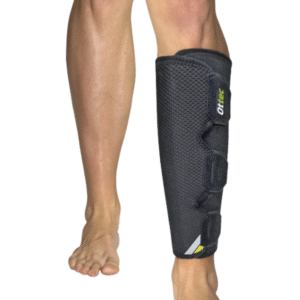
A calf brace or compression sleeve can support recovery. The brace provides compression and support, reducing strain on the muscle during movement. This helps reduce pain and promotes recovery.
During recovery, it may be important to gently stretch the muscle. A night splint can help gradually load the muscle fibers. In addition, a compression sleeve during sports can help keep the muscles warm and reduce the risk of re-injury.
Benefits of a calf brace for a pulled calf
- Supports the calf muscle during recovery
- Reduces pain and muscle tension
- Stimulates blood circulation
- Reduces the risk of re-injury
- Provides stability during walking and sports
- Suitable for daily use and sports