What is an anterior cruciate ligament injury?
In an ACL injury, the anterior cruciate ligament is damaged or completely torn. This injury is also referred to as an anterior cruciate ligament rupture or ACL tear. The cruciate ligament in the knee is essential for stability during rotational movements and sudden changes in direction. When this structure is damaged, external forces are less effectively absorbed, which can result in an unstable knee.
What happens when a cruciate ligament in the knee is torn?
When a cruciate ligament in the knee is torn, swelling often occurs immediately due to bleeding within the joint. The knee may remain swollen for an extended period. Pain usually originates from surrounding structures in the knee joint, such as the joint capsule and the meniscus. Many people describe that the knee “popped during sports” or suddenly twisted at the moment of injury.
Cause of an anterior cruciate ligament injury
An ACL rupture usually results from an acute sports trauma. This commonly occurs in sports such as football, basketball, volleyball, rugby or skiing, but can also happen during a fall from a bicycle. When the lower leg suddenly moves forward relative to the upper leg or undergoes a powerful rotational movement, the anterior cruciate ligament can become overstretched and tear. The risk is particularly increased when the knee twists during sports while the foot remains planted on the ground.
Anterior cruciate ligament injury in sports
ACL injuries occur relatively frequently in athletes due to rapid changes of direction, abrupt stops and jumping movements. A combination of rotation and forward translation of the lower leg can lead to a torn anterior cruciate ligament. After the injury, returning to sports is usually not immediately possible due to pain, swelling and instability.
Symptoms of a cruciate ligament injury
- Rapid swelling of the knee after trauma
- An audible or palpable pop at the time of injury
- Persistent swelling of the knee
- A feeling of instability or giving way
- Pain originating from surrounding structures
Diagnosis and treatment of an anterior cruciate ligament rupture
The diagnosis is made through physical examination and imaging, such as an MRI scan. When the ligament is completely torn, surgical reconstruction may be necessary, especially in young or active patients. In cases of a partial ACL tear, conservative treatment with intensive physiotherapy to strengthen the surrounding muscles may be chosen. However, a feeling of instability may persist.
Support with a knee brace for ACL injury
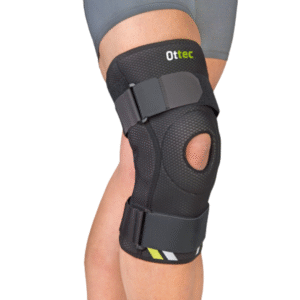
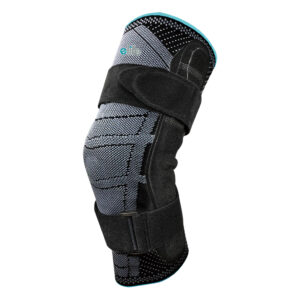
In the case of an unstable knee after an anterior cruciate ligament injury, a stabilizing knee brace can provide support. A brace helps absorb forces that are normally controlled by the cruciate ligament and can provide additional confidence during daily activities or sports. Especially in cases of partial injury or during the rehabilitation phase, a knee brace can contribute to improved control without completely restricting freedom of movement.
Benefits of a knee brace for a torn cruciate ligament
Wearing a knee brace for a cruciate ligament injury can help stabilize the knee joint during weight-bearing activities.
- Supports an unstable knee
- Limits excessive forward movement of the lower leg
- Helps absorb forces more effectively during movement
- Increases confidence during rehabilitation
- Suitable for daily use and sports
- Equipped with hinges for stability without full immobilization