Complaints and deformities of the chest
The chest consists of the breastbone, ribs and thoracic vertebrae. Together, these structures form a strong yet flexible framework that protects the heart and lungs, among other organs. The chest moves continuously during breathing and also plays a role in posture and movement of the upper body.
Various complaints and deformities can affect the chest. Some are caused by a fall or other injury, while others are related to the shape and development of the chest. For conditions that specifically affect the ribs, such as bruised or broken ribs, you can find more information on our separate page about rib injuries.
A protruding breastbone or chest deformity
Does the breastbone clearly protrude forwards or does the front of the chest appear to stick out? This may be a sign of pectus carinatum. This chest wall deformity is also known as pigeon chest.
The extent to which the breastbone protrudes varies considerably from person to person. The deformity can be symmetrical, with the centre of the chest protruding forwards, but it can also be more noticeable on one side.
Pigeon chest or pectus carinatum
With pectus carinatum, the breastbone and parts of the adjacent rib cartilage protrude further forwards than usual. The deformity usually develops during growth and may become more noticeable during a growth spurt.
Pectus carinatum is primarily a deformity of the shape of the chest. Not everyone experiences physical symptoms as a result. However, the visible appearance can be perceived as bothersome and some people may also experience physical discomfort.
Possible characteristics of pectus carinatum
- A breastbone that protrudes forwards
- A protruding or abnormal shape of the chest
- A difference between the left and right sides of the chest
- Tenderness around the protruding area
- A chest that protrudes more noticeably during growth
Support with a chest brace
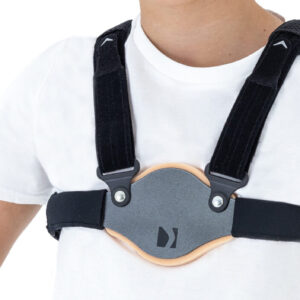
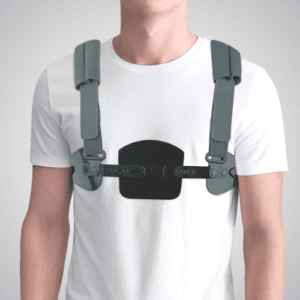
Special chest braces are available for pectus carinatum, also known as pectus carinatum orthoses. These braces work differently from a standard elastic rib brace. A pectus carinatum brace applies controlled pressure to the protruding area of the chest and provides counterpressure at the back.
The aim is to gradually influence the shape of the chest over a longer period of time. Whether treatment with a brace is suitable depends on factors such as age, the shape of the chest and how flexible the chest wall still is.
Pectus carinatum brace for children and adults
ProBrace offers chest braces for different body sizes. In children and adolescents, the chest is generally more flexible while they are still growing. A properly fitting pectus carinatum brace that can be adjusted throughout the treatment period is therefore important.
Special pectus carinatum braces are also available for adults. An adult chest is generally less flexible, which means the possibilities for correction can vary from person to person. It is therefore advisable to have your situation assessed to determine whether brace treatment is suitable.
Which chest brace do you need?
The most suitable chest brace depends largely on the condition and intended use. Pectus carinatum requires a corrective orthosis specifically developed for this condition. This type of brace applies targeted pressure to the protruding area of the chest.
If, on the other hand, you have rib pain following a fall, impact or accident, a rib brace may be a better choice. A rib brace is designed to support the ribs and chest and does not have the same corrective function as a pectus carinatum brace.
Are you unsure which chest brace is suitable for your situation? Contact a ProBrace specialist for personal advice on the appropriate type of brace and size.
When should you seek medical attention?
Not every chest complaint is suitable for self-treatment with a brace. If you suddenly experience chest pain or pressure, shortness of breath or feel seriously unwell, seek medical attention. If you notice a change in the shape of your chest and do not know what is causing it, it is also advisable to have this assessed by a doctor.