What is a calf muscle strain?
A calf muscle strain is a common calf injury in which the muscle fibers are overstretched but not torn. This injury often occurs during sports activities that involve sudden force, such as sprinting, jumping, or pushing off. The pain usually develops during or after exertion and can immediately limit movement.
Location and function of the calf muscles
The calf muscles, consisting of the gastrocnemius and soleus, play an important role in moving the foot and ankle. They are responsible for pushing off during walking and running and help stabilize the lower leg. Due to this intensive function, they are prone to overload and injuries such as strains or muscle tears in the calf.
What happens during a calf muscle strain?
In a strain, the muscle fibers are stretched without actually tearing. This can cause pain, stiffness, and reduced muscle function. The symptoms are usually less severe than with a muscle tear but can still be bothersome during movement. Many people experience this as a dull or pulling pain in the calf.
How does a calf muscle strain occur?
The most common cause of a calf muscle strain is sports-related strain. The muscles may not be sufficiently warmed up, even after a warm-up. A sudden movement or explosive effort can also lead to overstretching of the muscle.
In addition, fatigue or overuse of the muscle can play an important role. Toward the end of a training session, muscles are often less resilient, increasing the risk of a strain.
Symptoms of a calf muscle strain
- Pain in the calf during movement
- A stiff or pulling sensation in the muscle
- Difficulty walking or pushing off
- Mild swelling or tenderness
- Instability in the foot
What is the difference between a strain and a muscle tear?
In a strain, the muscle fibers are overstretched but not torn. The pain is usually less severe, and the muscle often remains usable. In a muscle tear, the muscle fibers are actually damaged, leading to acute pain and loss of function. It is important to recognize this difference in order to choose the right treatment.
Diagnosis and treatment of a calf muscle strain
The diagnosis is usually based on symptoms and a physical examination. In the initial phase, it is important to rest the muscle and avoid further strain. After that, the muscle can gradually be loaded again.
Heat and blood circulation play an important role in recovery. By properly caring for the muscle and gradually increasing load, recovery can be accelerated. It is also possible that stiffness develops after immobilization, in which case a night splint can provide support.
How long does recovery from a calf muscle strain take?
Recovery time depends on the severity of the injury. In many cases, mild strains recover within a few days to weeks. It is important not to overload the muscle too quickly to prevent worsening or a muscle tear.
Support with a calf brace for a strain
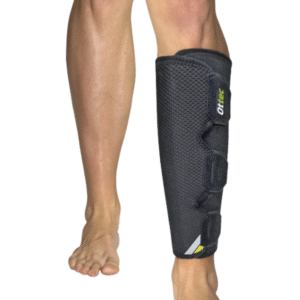
A calf brace or compression sleeve can provide support for a strained calf muscle. The brace offers extra stability and helps to gradually load the muscle during recovery.
If you are looking for a calf brace or compression sleeve, it is important to choose one that provides sufficient support without completely restricting freedom of movement.
Benefits of a calf brace for a strain
- Supports the calf muscle during movement
- Stimulates blood circulation
- Reduces pain and tension
- Helps speed up recovery
- Provides stability and confidence during sports
- Suitable for daily use and sports