What is runner’s knee?
With runner’s knee, you experience knee pain while running caused by overload of structures around the knee joint. This injury is often called runner’s knee and is medically known as iliotibial band syndrome. It involves irritation on the outside of the knee due to repetitive movements. Symptoms usually develop gradually and are most common in runners, walkers, and athletes who cover many miles.
Location and involved structures in outer knee pain
With runner’s knee, the structures on the outside of the knee joint are mainly overloaded. Repeated bending and stretching movements create friction around the knee. This load can increase especially over longer distances or on hilly terrain, leading to pain during and after activity.
What goes wrong in iliotibial band syndrome?
When the knee is repeatedly loaded without enough recovery time, the tissue on the outside of the knee can become irritated. Running posture plays an important role. Factors such as bow legs, knock knees, a leg length difference, flat feet or high arches can increase pressure on the outside of the knee. Reduced hamstring strength, poor running technique, or unsuitable footwear can also contribute to runner’s knee.
How does knee pain while running develop?
Runner’s knee usually results from a combination of overload and reduced knee control. A rapid increase in training intensity, frequent running on hard surfaces, or insufficient strength in the thigh and hip muscles can contribute to pain on the outside of the knee. Symptoms often increase as mileage rises or when load is built up too quickly.
Symptoms of runner’s knee
- Pain on the outside of the knee during walking or running
- Increased symptoms during long distances or downhill running
- Often little to no pain at rest
- Stiff or aching sensation around the knee
- Reduced load tolerance during sports
Why does running cause pain on the outside of the knee?
During running, the knee is loaded with every step. When posture or running technique is not optimal, friction on the outside of the knee increases. Especially during long distances, marathons, or mountain hikes, the load can rise quickly. By improving muscle strength, running technique, and training progression, this type of knee pain during running can often be reduced.
Diagnosis and treatment of runner’s knee
The diagnosis of runner’s knee is usually based on the pattern of symptoms and a physical examination. Recovery mainly focuses on reducing load. In the first weeks, it is important to rest the knee and temporarily stop running. Alternative activities such as cycling or swimming are often possible. Afterwards, load can be gradually increased by running less often, at a slower pace, and over shorter distances. Targeted exercise therapy can help improve knee stability.
Support with a knee brace for outer knee pain
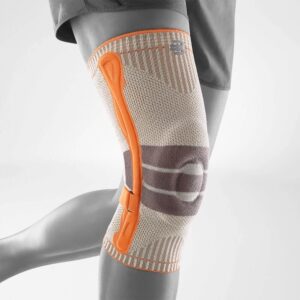
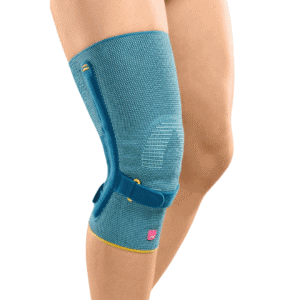
A knee brace can be valuable support for runner’s knee by providing extra stability to the knee joint and helping to distribute load more evenly during movement. During the recovery phase, a brace can contribute to better control and confidence, especially when resuming walking or light running. The brace supports the knee without fully immobilizing it, allowing comfortable movement.
Benefits of a knee brace for runner’s knee
Wearing a knee brace for runner’s knee can help improve knee control and reduce overload during recovery and the gradual return to sports.
- Supports the knee joint during movement
- Reduces pain on the outside of the knee
- Provides extra stability during running and walking
- Helps with controlled load progression
- Suitable for sports and daily use
- Comfortable and easy to wear
- Limits movement without fully immobilizing the knee