9 most frequently asked questions about a calf strain injury
A calf strain injury is a tear in the calf muscle that occurs suddenly and causes immediate, severe pain. It is a common sports injury that forces you to stop moving and often requires weeks of recovery. In this overview, we answer the 9 most frequently asked questions about a calf strain: from initial treatment to recovery and preventing recurrence.
- What are the symptoms of a calf strain?
- How painful is a calf strain?
- What should I do if I have a muscle tear in my calf?
- What should you not do with a calf strain?
- How do I recover from a calf strain?
- What is the risk of recurrence after a calf strain?
- Can I walk with a calf strain?
- How long should I avoid driving with a calf strain?
- Is cycling good for a calf strain?

What are the symptoms of a calf strain?
A calf strain is a common calf injury in which muscle fibers tear due to sudden overload. It often occurs during sports and is characterized by acute, sharp pain, sometimes accompanied by a snapping sound or sensation. Walking or pushing off becomes immediately difficult, followed by swelling and sometimes bruising.
Symptoms of a calf strain
- Sudden, sharp pain in the calf
- Audible or noticeable “pop”
- Difficulty walking or pushing off (muscle weakness)
- Swelling within a few hours
- Bruising due to torn blood vessels
- Sore, stiff, and sensitive muscle
How painful is a calf strain?
A calf strain is one of the most painful sports injuries and often occurs so suddenly that movement stops immediately, as if you are being held back. The pain feels sharp, burning, and cutting, and may radiate toward the ankle or knee. Immediately after the injury, normal walking is often impossible, and even at rest the muscle may ache or throb. In the following days, pain may increase due to muscle cramps and swelling, and with a larger tear, significant bruising may appear.
The severity of pain depends on the extent of the tear. With a small tear (grade 1), you may be able to move carefully after a few days, while a larger tear (grade 2 or 3) causes prolonged pain. Although pain usually decreases after several days, the muscle remains sensitive during exertion. It is therefore important to build up recovery gradually and avoid overload.
Standing on your toes is often painful (or impossible). If after 3 days you still cannot stand on your toes, consider a possible Achilles tendon rupture and consult a doctor.
What should I do if I have a muscle tear in my calf?
With a muscle tear in your calf, it is crucial to take the right steps immediately for optimal recovery. Stop moving right away and do not force the muscle. Cool your calf 4–5 times on day 1 for about 20 minutes with a cold pack or ice to reduce pain and swelling. Elevate the leg to reduce pressure and swelling, and use compression, such as a pressure bandage or compression stocking, to provide support and limit bleeding. Avoid forceful stretching in the first days. A heel lift or sturdy heel can help with walking.
Seek medical advice if you are unsure, if pain or swelling increases, or if you cannot stand on your toes after 3 days.
What should you not do with a calf strain or muscle tear?
With a calf strain or muscle tear, it is important to know what not to do. Do not continue walking or playing sports, as this can worsen the tear and delay recovery. In the early phase, intensive stretching, deep massage, heavy strength training, and heat are discouraged, as they place extra stress on muscle tissue and can worsen swelling and pain. Also avoid alcohol and running during the first 48–72 hours, according to the HARM principle.
How do I recover from a calf strain?
A calf strain is a small tear in your calf muscle that needs time to heal. Recovery occurs in phases: first rest and protection of the muscle, then controlled buildup with light movements, and finally a return to sports or work. It is important not to rush recovery, as loading too quickly increases the risk of re-injury.
The first days are crucial: stop sports or continued walking immediately, cool the muscle for 15–20 minutes several times a day, elevate the leg, and use compression to reduce swelling. After a few days, you can begin gentle, pain-free movements. Recovery takes on average 2 to 8 weeks, depending on the severity of the tear. Recovery from larger tears can take 8–12 weeks.
What is the risk of recurrence after a calf strain?
A calf strain is an injury that unfortunately often recurs, especially if you return to sports too quickly or do not follow proper rehabilitation. The muscle fibers that tear heal with scar tissue, which is less elastic than healthy muscle tissue, making the calf more vulnerable. Rapid explosive movements such as sprinting, jumping, or sudden turning can lead to a new tear.
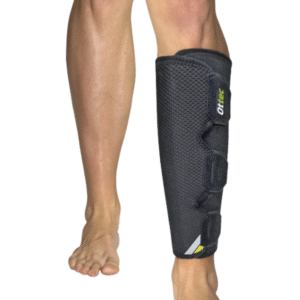
Good rehabilitation is essential to reduce the risk of recurrence. Gradually build up recovery under the guidance of a physiotherapist, with targeted calf exercises to restore strength and flexibility. A proper warm-up before sports also helps. Aids such as a compression stocking or calf brace can provide comfort with swelling.
Can I walk with a calf strain?
After a calf strain, normal walking is often immediately difficult due to sudden, sharp pain that literally brings you to a stop. Torn muscle fibers make applying force difficult or impossible. Sometimes you can take a few careful steps, but this is often painful and unstable. You may consider using crutches if standing or walking is too painful, and temporarily wearing a heel lift in your shoes.
The advice is to rest during the first days and not force walking. Walking too early or too much can worsen the tear and delay recovery. Short, pain-free walking is usually possible within a few days, depending on severity. Full recovery varies from two to eight weeks.
How long should I avoid driving with a calf strain?
Whether you can drive again after a calf strain depends on the severity of the injury and which leg is affected. With a right-leg injury, you may only drive once you can safely and painlessly perform an emergency stop and fully depress the pedal. With the left leg (in automatic cars), this may be possible sooner. In the first days, driving is usually not advisable because the muscle is painful and force is limited. Always test safely whether you can operate the pedals properly, or consult your doctor or physiotherapist.
Is cycling good for a calf strain?
Cycling can support recovery from a calf strain, but only once acute pain and swelling have subsided and only if it is pain-free. In the first days, rest is essential; exertion can worsen the tear. After several days to a week, you can cautiously start cycling to stimulate circulation without heavily loading the muscle. Start with short, pain-free rides in a light gear and avoid heavy resistance or standing cycling. Gradually build up duration and intensity.
Directly to:
- What are the symptoms of a calf strain?
- How painful is a calf strain?
- What should I do if I have a muscle tear in my calf?
- What should you not do with a calf strain or muscle tear?
- How do I recover from a calf strain?
- What is the risk of recurrence after a calf strain?
- Can I walk with a calf strain?
- How long should I avoid driving with a calf strain?
- Is cycling good for a calf strain?