


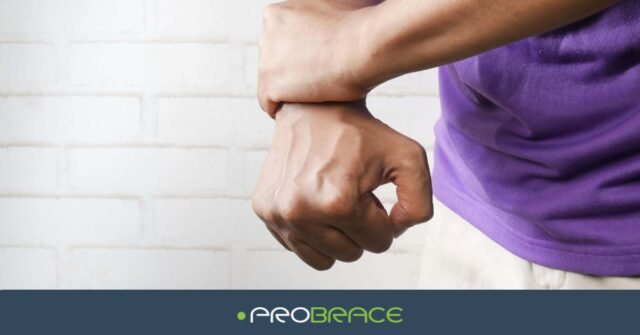
Wrist tendonitis: What you need to know
Wrist tendonitis: What you need to know Wrist tendonitis occurs when the tendons become irritated due to overuse or repetitive movements. Co…

Wrist tendonitis: What you need to know
Wrist tendonitis: What you need to know Wrist tendonitis occurs when the tendons become irritated due to overuse or repetitive movements. Co…
Buying a calf brace? What you need to know about support, symptoms and sizing
Buying a calf brace? What you need to know about support, symptoms and sizing Calf problems are common among people who are physically activ…
Golfer’s elbow
Do I have golfer’s elbow? Elbow pain is common and is often associated with the sport of golf. But did you know that golfer’s el…
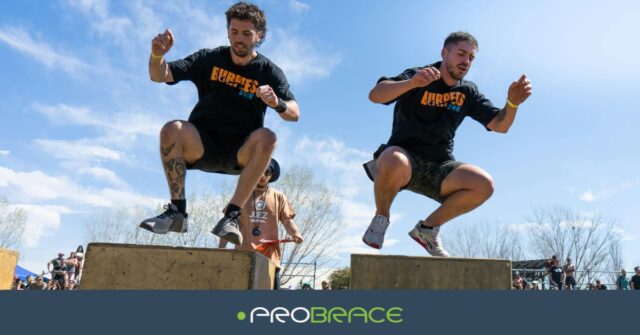
Jumper’s Knee: What Is Patellar Tendinopathy and How Do You Recover?
Jumper’s Knee: What Is Patellar Tendinopathy and How Do You Recover? Jumper’s knee, also known as patellar tendinopathy, is a co…
Ehlers-Danlos Syndrome (EDS) and Brace Advice
Ehlers-Danlos Syndrome (EDS) and Brace Advice Ehlers-Danlos syndrome (EDS) is an inherited connective tissue disorder in which the body̵…
CrossFit and HYROX Braces
HYROX vs CrossFit: What Are the Differences and How Can You Prevent Injuries? HYROX and CrossFit have become extremely popular among athlete…
Injuries: From Cause to Recovery
Injuries: From Cause to Recovery Injuries can occur at any age. Whether you play sports, have a sedentary job, or are simply busy with famil…

Brace for vacation
Summer holiday: How to keep your body fit And why a good brace or insoles is indispensable! The summer holiday is the perfect time to comple…

Abdominal wall hernia
All about abdominal wall hernia: recognizing, treating and preventing What are the symptoms of an abdominal wall hernia? An abdominal wall h…

9 most frequently asked questions about calf strain
9 most frequently asked questions about a calf strain injury A calf strain injury is a tear in the calf muscle that occurs suddenly and caus…

A brace for RSI complaints
A Brace for RSI Complaints Prolonged computer use, repetitive work, or a fixed posture are now common parts of daily life. It is not surpris…

Exercises for knee instability
Exercises for knee instability An unstable knee often feels like it is “giving way” or “buckling”. This can occur after a ligament i…

Orliman Boxia Plus Drop Foot Support
10/10
Very fast order fulfillment, everything as described, it was exactly what I needed, it was a really good purchase
E un ottimo prodotto che aiuta a…
10/10
E un ottimo prodotto che aiuta a sostenere il piede in caso che bisogna ricuperare il movimento giusto.Il vostro prodotto e consigliato dalle migliori…
Useful brace
8/10
After several nights of use, I’m still getting used to the brace. It’s not comfortable to sleep in all positions, but the elbow pain…
First Class Service
10/10
Pro Brace is a very efficient and professional supplier of its products. It is a pleasure to do business with them
Your assist my request with very…
10/10
Your assist my request with very profesional response, detail in product expanation and diligently response
You can register a return shipment within 14 days after receiving your order through our return portal. You will be given two options:
How should I package my product to return it? +
Use sturdy packaging, preferably the original shipping box in which you received your order. This minimizes the risk of damage and allows us to make someone else happy with the product. After it has been returned, the item must still be suitable to be offered as a new product.
Never use the product’s own packaging as the shipping box! If the product packaging becomes damaged, replacement costs may be charged.
What are the return conditions for returning a product? +
How can I exchange my product for another product or size? +
Would you like to exchange the product for another size or a different product?
You can easily use our exchange service. Please follow the steps below:
Once you have purchased the return label, you will receive it by e-mail.
Important: always keep the drop-off receipt until your return has been fully processed. This serves as proof that you handed over the parcel.
Once we have received your return, we will process it as soon as possible (within a maximum of 5 working days). After processing your return, you will receive a new order confirmation containing the product you exchanged your original item for.
For the first exchange, no additional shipping costs will be charged. This order confirmation also confirms that your return has been successfully processed.
As soon as you receive this confirmation and the product is in stock (if a product is not in stock, it will be indicated with the word “backorder” on the product page), your order will be collected by the carrier the same day at 17:00 (5 PM).
Price difference when exchanging
If you exchange your product for a more expensive item, you will receive a separate e-mail containing a payment link for the price difference.
If the product you exchange for is cheaper, you will receive a separate e-mail confirming that the price difference will be refunded to you.