What is drop foot?
Drop foot is a functional disorder in which the muscles that lift the foot (the dorsiflexors) do not work or work insufficiently. As a result, the foot cannot be lifted properly during walking and drags along the ground. Drop foot is usually caused by damage to the peroneal nerve, for example after a herniated disc, trauma, surgery, or prolonged pressure on the nerve. Neurological conditions such as multiple sclerosis (MS) or a stroke can also cause drop foot.
Causes of drop foot
Drop foot can be caused by various factors. The main underlying cause is impaired nerve control. In many cases, drop foot results from damage to the nerve in the lower leg (the peroneal nerve). This often occurs due to trauma, prolonged sitting with crossed legs, or long periods of squatting (for example during work). When the nerve becomes compressed or narrowed (stenosis), nerve signals can no longer be transmitted properly to the foot, which may lead to drop foot. In addition, nerve damage may occur during surgery.
Diagnosis of drop foot
The diagnosis is based on gait pattern, muscle strength, and neurological examination. The physician assesses the inability to lift the foot and examines reflexes and sensory function. In some cases, additional tests such as nerve conduction studies (EMG) or imaging are performed to determine the underlying cause.
Treatment and recovery of drop foot
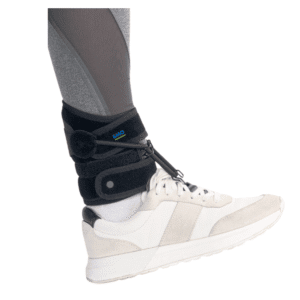
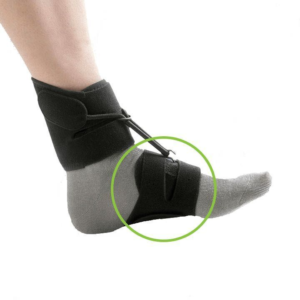
Treatment of drop foot focuses on addressing the underlying cause, physiotherapy, and wearing a drop foot brace (also known as an ankle-foot orthosis or AFO). A brace supports the foot during walking and helps prevent tripping. In some patients, recovery may occur as the nerve heals, but this process can take several months. In severe cases, a brace remains necessary for daily functioning.
Symptoms
- Difficulty or inability to lift the foot and toes
- Pain on the instep of the foot and the front of the lower leg
- Tingling sensation in the foot
- Numbness in the foot
Treatment of drop foot
The best way to treat this condition is to relieve direct pressure on the nerve. Adjusting body posture and changing daily habits is often sufficient to better cope with drop foot. In addition, there are various exercises to improve control and sensitivity of the ankle and foot. For personal advice, consult a ProBrace physiotherapist. In most cases, drop foot recovers within two to three months, but in some situations it may never fully resolve. In cases of severe weakness or complete paralysis, a combination of physiotherapy, targeted training, and the use of a brace or support provides the best outcome.
A drop foot splint, brace, bandage, or EVO is an aid that prevents the foot from “drooping” during the swing phase of gait or slapping down when the heel makes contact with the ground (heel strike phase). Drop foot braces and bandages are mainly used for people with weakened dorsiflexor muscles and mild drop foot. EVOs (ankle-foot orthoses), on the other hand, are more commonly used for severe drop foot, more serious injuries, and cases combined with spasticity.