Abdominal wall and umbilical hernias: What you need to know
An abdominal wall hernia (also called a hernia abdominalis) occurs when there is a weak spot or tear in the abdominal wall. The abdominal wall is made up of muscles and connective tissue and keeps the organs in the abdomen in place. With a hernia, part of the abdominal contents, such as fat or intestine, can protrude outward, often noticeable as a lump or swelling. Initially, this may barely be noticeable, but with exertion, lifting, or coughing, the bulge can become more pronounced.
A specific type of abdominal wall hernia is the umbilical hernia, where the weak spot is located at the navel. A small portion of the abdominal contents can push outward, visible as a bump around the belly button. This can cause discomfort or pain, especially when pressure is applied to the abdomen. Umbilical hernias occur in both children and adults.
What are the symptoms of an abdominal wall or umbilical hernia?
A visible or palpable lump in the abdomen or groin, which often becomes larger with exertion, coughing, or lifting.
Pain or a pressing sensation, especially when standing for long periods or under heavy strain.
Sometimes few complaints at first, so the hernia is noticed only later.
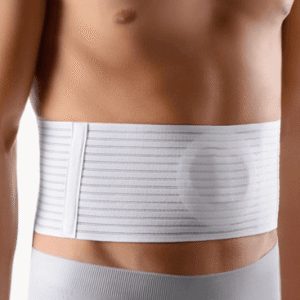
In case of symptoms, wearing an abdominal belt, brace, or supportive bandage can help stabilize the abdomen, relieve pain, and support recovery. For specific cases such as umbilical or hernia pants, special aids are also available.
Types of abdominal injuries
There are different types of injuries in the abdominal area. These can include an abdominal wall hernia, such as an umbilical hernia at the navel or an inguinal hernia in the groin area. Scar hernias can also occur at the site of previous abdominal surgeries. Less frequently, injuries can occur in the upper abdomen or thigh region. Other abdominal complaints may arise from overuse, tension in the abdominal muscles, or a weakened abdominal wall, for example after pregnancy or prolonged pressure.
Braces and Supportive Devices for Abdominal Injuries
For complaints in the abdominal area, braces, abdominal belts, and supportive bandages can provide relief, especially when immediate treatment or surgery is not possible or during the recovery period afterward. An abdominal belt or supportive brace applies gentle pressure to the abdomen, reducing pain and discomfort and supporting the abdominal muscles. This also helps prevent weak spots from worsening during lifting, coughing, or other daily activities.
There are also specially designed umbilical or hernia bandages with a pressure pad (pelotte) that provide targeted support to a weak spot, such as in the case of an umbilical hernia. Using a brace can significantly improve daily comfort, especially with mild to moderate complaints.
Important: a brace or abdominal belt provides support and reduces pain, but does not heal the underlying injury. Always use a supportive device in consultation with a doctor or physiotherapist, as incorrect use can put additional strain on the abdomen or affect circulation.