Low back pain: what now?
Back pain has been one of the most common health problems in the Netherlands for many years. Many people suffer from it on a daily basis, sometimes suddenly and sometimes chronically. The pain may radiate to the hips, buttocks or even the legs and often has a major impact on your work, sports activities and daily life. But what can you do yourself to reduce or prevent back pain?
What causes low back pain?
Low back pain can have various causes. In many cases, there is no direct damage to the back, but the pain develops due to overuse or poor posture.
Common causes include prolonged sitting or standing in an incorrect position. The body may get too little movement, be overloaded, or be subjected to incorrect lifting techniques. Muscles can also tense up due to stress or mental strain. In addition, degeneration, osteoarthritis of the spine, a herniated disc, or nerve irritation in the lower back can be responsible for the pain.
In medical terms, back pain without a clear cause is referred to as non-specific low back pain. In most cases, the complaints disappear on their own within a few weeks, provided the back remains active and is not overly protected.
What you can do yourself for low back pain
The most important advice for low back pain is to keep moving. Too much rest actually causes the muscles to weaken, allowing the pain to persist for longer. Try to continue light activities such as walking, cycling or swimming. Targeted exercises to strengthen the back and abdominal muscles can also help reduce the strain on the back.
In addition, heat can provide relief, for example by taking a warm bath or using a heating pad. If the pain persists, it is advisable to consult a physiotherapist or doctor to determine the cause of the complaints.
Exercises for low back pain
Regular exercise helps keep the back muscles flexible and strong. Below are some simple exercises you can do at home. Perform them slowly and without pain.
Pelvic tilt
Lie on your back with your knees bent and your feet flat on the floor. Gently press your lower back into the floor by tilting your pelvis. Hold for 5 seconds and relax. Repeat 10 to 15 times.
Knees to chest
Lie on your back and slowly pull one knee towards your chest. Hold for 5 seconds and release. Repeat with the other leg. Then pull both knees towards your chest at the same time.
Cat pose (mobility exercise)
Get on your hands and knees. Round your back by pulling in your abdomen, then arch your back by extending it. Repeat 10 times at a calm pace.
Back extension (McKenzie exercise)
Lie on your stomach, support yourself on your forearms and slowly push your chest upwards. Your lower back may gently arch. Hold briefly and then slowly lower back down. Repeat 10 times.
These exercises improve mobility of the lower back, strengthen stabilising muscles and help reduce tension.

Support from a back brace or pelvic belt
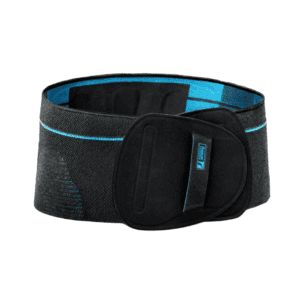
In cases of low back pain or instability, a back brace or pelvic belt can temporarily provide support. A brace helps stabilise the back, encourages proper posture and prevents overloading. This allows the muscles to relax and gives the back time to recover.
Back brace for acute back pain
In cases of acute low back pain, an elastic back support can provide relief. The Össur Formfit Pro back brace is specifically designed for people with sudden lower back pain. The brace is easy to put on independently, invisible under clothing and provides light compression for immediate support.
Do you need more firmness? Then the Thuasne Lombacross Activity back brace is an excellent choice. This back support features two additional straps on both sides for increased compression and stability, making it ideal for severe back pain or recurring complaints.
Wearing a back brace preventively
A back brace can also be used preventively, for example if you regularly experience a “throwing out your back” sensation, suffer from back pain at night, or notice that your back becomes fatigued quickly.
The Thuasne Lombafirst back brace is very suitable for this purpose. This shaped back brace is easy to put on independently, invisible under clothing and comfortable to wear all day. It provides light support, promotes an upright posture and helps prevent overloading during work or daily activities.
Posture-correcting back brace
Some braces not only help with pain but also correct poor posture. The GO Medical Upper Back Posture Corrector is ideal if you tend to sit hunched forward or let your shoulders slump. This brace subtly pulls the shoulders back, helping you stand more upright and reducing pressure on the upper back. The posture corrector is lightweight, invisible under clothing and very affordable.
For support of the lower back in cases of postural problems or instability, the Lombamum Back Brace is an excellent choice. This brace supports both the lower back and the pelvis and is often used by women during or after pregnancy to improve posture and relieve strain on the lower back.
Other back and pelvic support options
For mild to moderate back complaints, you may also consider:
- Thuasne Lombastart back brace an elastic back support that stabilises the lower back without restricting movement. Ideal for tired back muscles or mild overuse.
- E-Life Advanced LumbarFit back brace provides light compression and stimulates blood circulation, helping to reduce stiffness and muscle pain.
For more severe back complaints or chronic instability, we recommend:
- Reh4Mat Lumbar Back Brace a firm brace with adjustable closures, supporting the lower back in cases of osteoarthritis, lumbago or herniated disc.
- Bauerfeind Lumboloc Forte back brace a stabilising brace with stays and additional straps for extra support, suitable for long-term pain or degenerative back conditions.
In cases of pelvic instability or pain low in the back, a pelvic belt (such as the Thuasne Ortel P or the GO Medical Pregnancy Belt) can also help. These belts stabilise the pelvis and reduce pressure on the lower back, making movement less painful.