Back braces for athletes: reducing pain and supporting movement
Back injuries are common among both recreational athletes and more intensive sports participants. Repetitive loading, explosive movements or poor posture can overload the lower back. Problems such as low back pain, muscle tension or instability can have a major impact on both sports performance and daily functioning.
In this blog, you can read which back injuries are common in sports, why a back brace can provide effective support and what to consider when choosing the right sports back brace for your situation.
Common back injuries in sports
The lower back is placed under considerable strain during sports, especially with twisting, bending, lifting and impact loading. Common sports-related back problems include:
- Low back pain caused by overuse
- Muscle strains and muscle tension
- Lumbar instability
- Herniated disc or disc-related problems
- Facet joint problems
- Stress fractures, such as spondylolysis in young athletes
What are lumbar braces?
Lumbar braces, also known as back braces, are supports worn around the lower back to support and stabilise the spine externally. Lumbar braces are commonly used for:
- Chronic or recurring low back pain
- Lumbar instability
- Muscle weakness or insufficiency
- Post-operative recovery
Back braces provide effective support for sports injuries
Mechanical support and pain relief
Scientific research shows that back braces can be effective in reducing low back pain and improving functional capacity in musculoskeletal conditions through compression and stabilisation (PMC). This can help reduce strain on the spine and limit painful or extreme movements. As a result, a back brace may provide pain relief and greater confidence during sports and daily activities.
Improved load tolerance and confidence in movement
A meta-analysis (PLOS ONE) shows that wearing a back brace can result in a significant reduction in pain and an improvement in functional status. The additional support can give athletes a greater sense of control and stability during movement, which may increase confidence when returning to physical activity. This effect is particularly evident in acute and subacute low back pain.
Effect on muscle activity and posture
Biomechanical research (Orthopädie Technik) shows that wearing a lumbar support causes temporary changes in muscle activity without adverse long-term effects on muscle function. The core muscles remain active and adapt to the external support. A back brace may also contribute to improved posture and greater body awareness during movement and physical loading.
Effective support within sports rehabilitation
Literature on lumbar spine injuries in athletes (Sports Medicine – Open) emphasises that a conservative approach — such as rest, exercise therapy and gradual progression of load — is usually the first treatment option. Back braces can play a useful additional role by providing temporary support, reducing pain and helping to limit renewed overuse. In well-supervised rehabilitation programmes, many athletes successfully return to sport when a back brace forms part of the treatment plan.
Benefits of wearing a back brace during sports
- Pain relief
- Support during physical loading
- Restriction of harmful movements
- Improved posture and proprioception
- Warmth and support for muscle tension
- Greater confidence during movement
- Helps prevent overuse and recurring complaints
What should you look for when choosing a back brace for sports injuries?
A good back brace can help you continue exercising responsibly or recover safely from an injury. The right choice depends on your symptoms, type of sport and the intensity of the load.
- Level of support: For mild symptoms or preventive use, a brace with moderate support is often sufficient. For chronic low back pain, instability or a herniated disc, a brace with firm stays provides more stability.
- Freedom of movement: Sufficient freedom of movement is important during sports. Choose a brace that provides support without restricting you completely.
- Fit and comfort: A slim, anatomical fit and breathable materials provide comfort during exercise and help prevent irritation.
- Fastening and adjustment: Adjustable Velcro systems make it possible to fit the brace properly to your body. Models with cross-strap technology provide additional stability.
- Your sport and level of loading: Explosive strength training places different demands on the back than walking, cycling or running. Match your choice to the intensity and duration of your sport.
If you are unsure, it is advisable to seek advice from a physiotherapist or sports physician.
We recommend the following back braces for sports:
| E-Life LumbarFit Back Brace | Thuasne Lombacross Activity Back Brace | |
|---|---|---|
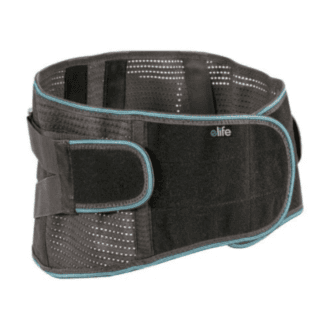 | 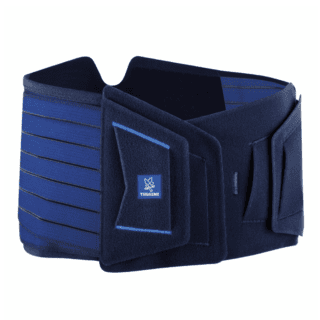 | |
| Support | Moderate to high – elastic support with double tension straps | High – firm support with additional reinforcements and cross-strap technology |
| Freedom of movement | Moderate – support without excessive restriction | Good – specifically designed for active movement |
| Material | Breathable mesh + elastic textile – comfortable during exercise | Elastic, breathable fabric – moisture-wicking and skin-friendly |
| Reinforcements | Flexible stays – support the lumbar spine | Elastic reinforcements and anatomical stays – stabilise without excessive restriction |
| Fastening | Double Velcro fastening – easy to put on independently | Elastic cross straps with Velcro – continuously adjustable for an optimal fit |
| Fit under sports clothing | Slim profile – fits well under a sports shirt | Discreet – barely noticeable under clothing |
| Unique features | Ergonomic design – follows the natural curve of the back | Postural support – encourages a more upright posture during movement |
| Ease of putting on and taking off | Very user-friendly – easy to put on independently | Requires slightly more adjustment – highly adjustable using the cross-strap system |
| Ventilation and moisture management | Good ventilation – suitable for prolonged wear during sports | Excellent moisture management – remains comfortable during exercise |
| Suitable sports | Fitness, strength training, cycling, light field sports | Golf, walking, running, fitness, rehabilitation after injury |
| Indications | Lumbar overuse, muscle tension, mild instability | Chronic low back pain, herniated disc, osteoarthritis, postural support |
| Recommendation | Choose E-Life for athletes who want functional support while maintaining freedom of movement | Choose Thuasne for intensive or prolonged support with postural correction |
| Price | €59.95 prices are subject to change | €89.95 prices are subject to change |
Advice from ProBrace
At ProBrace, we are happy to help you choose the right back brace for your sport and situation. Whether you are recovering from an injury or want to help prevent back problems during exercise, our team is ready to provide personalised advice.
Tip: read our blog with 10 exercises for a more flexible back.
Sources
- Effectiveness of lumbar orthoses in low back pain (PMC)
- The effect of lumbar supports on low back pain and functional status (PLOS ONE)
- Auswirkungen von Lumbalbandagen auf die Rückenmuskelaktivität beim Gehen (Orthopädie Technik)
- Lumbar Spine Injuries in Sports: Review of the Literature (Sports Medicine – Open)