Symptoms of rheumatism in the hands
Rheumatism is an umbrella term for more than one hundred conditions that affect the joints, muscles and tendons, including rheumatoid arthritis, osteoarthritis and gout. In rheumatoid arthritis, the immune system mistakenly attacks healthy joints, leading to inflammation and damage. Osteoarthritis involves wear of the cartilage, while gout is caused by a build-up of uric acid crystals, which can cause sudden and severe pain. In more severe cases, the fingers may become bent or deformed (joint deformities), further limiting hand function. Although rheumatic conditions cannot be cured, there are treatments and aids, such as compression gloves, that may help relieve symptoms and improve quality of life.
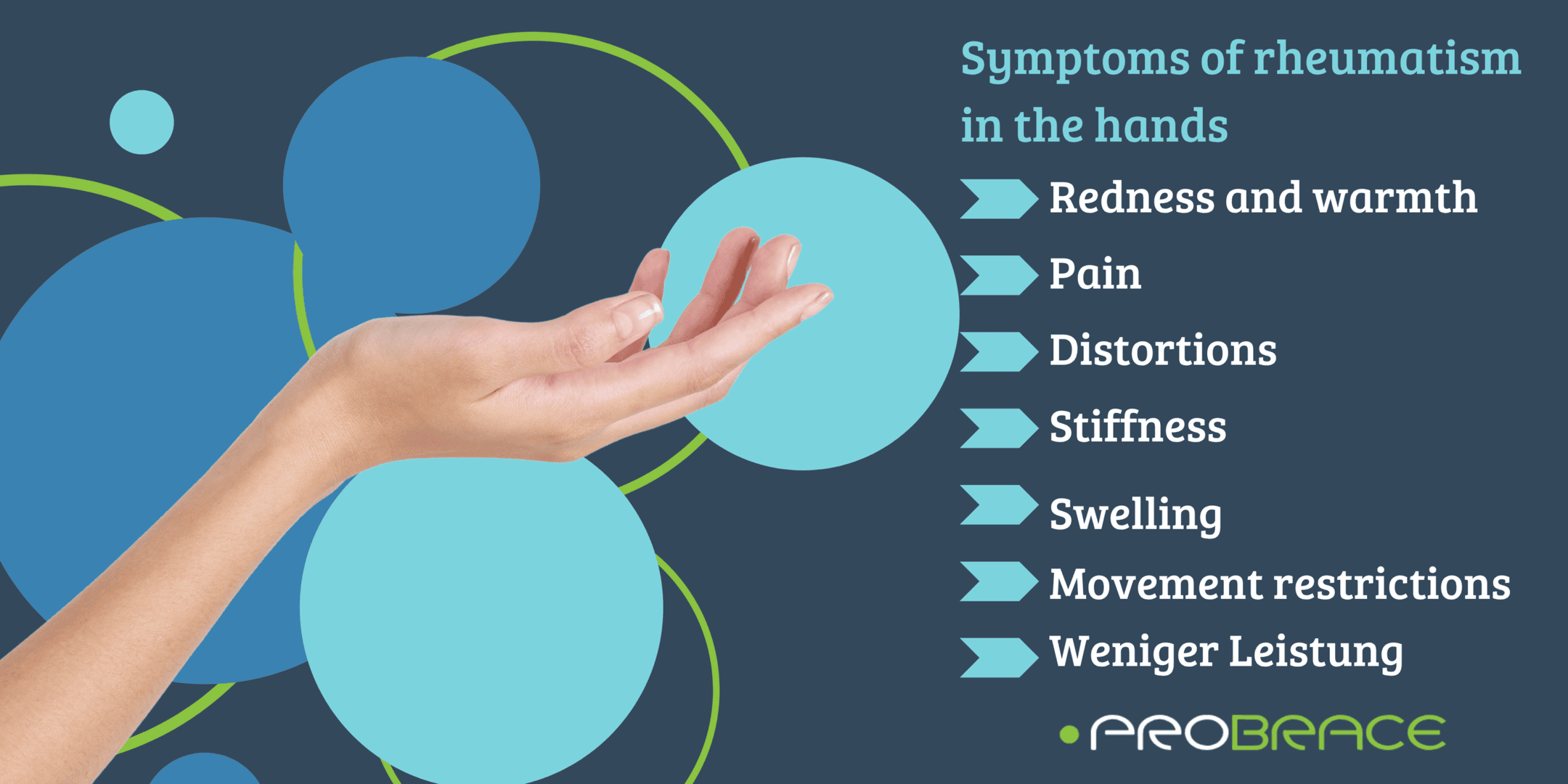
Rheumatism in the hands, also referred to as hand rheumatism, can have a major impact on daily life. Common symptoms include:
- Hand pain caused by rheumatism, ranging from mild to severe and sometimes occurring in flare-ups
- Stiffness in the hands, particularly in the morning, making it difficult to move the fingers
- Swelling of the hands and warmth around the joints, which may cause redness and discomfort
- Reduced grip strength, making everyday activities such as writing, cooking or opening jars more difficult
- Joint deformity in more severe cases, such as bent or deformed fingers
Treatments and aids for rheumatism
Treatments for rheumatic conditions focus on relieving pain and maintaining or restoring function. This may involve medication, physiotherapy and, in some cases, surgery. There are also aids that support the joints and make everyday activities easier.
Commonly used aids for rheumatism include:
- Compression gloves
- Wrist and hand braces
- Ergonomic aids for daily use
- Supportive cushions or aids for periods of rest
Research into the medical benefits of compression gloves for rheumatism
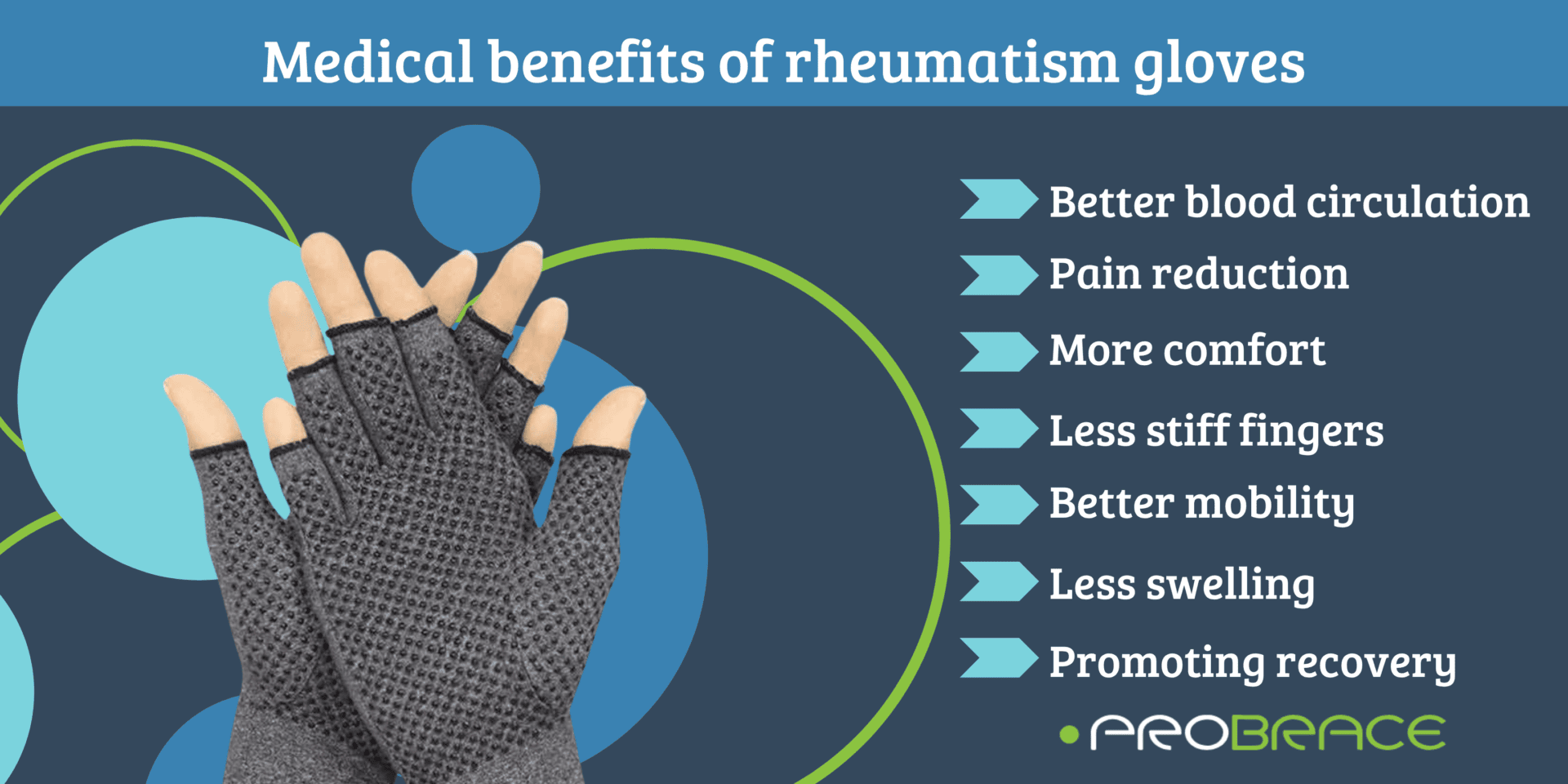
Arthritis gloves can be a useful aid for people with hand complaints caused by rheumatic conditions. Compression gloves are designed to provide light, constant pressure to the hands and fingers. This compression may help reduce pain, stiffness and swelling.
Research from the National Library of Medicine (NIH) into the medical effects of compression gloves in patients with rheumatic conditions(1) suggests that wearing these gloves may offer several benefits.
What was studied?
In the study, participants with rheumatic hand complaints wore compression gloves fitted by an occupational therapist for four weeks. They were assessed for:
- Hand pain at rest, during activities and at night
- Stiffness in the hands and fingers
- Swelling of the hand joints
- Finger flexibility
- Overall hand function
Results of the study
After four weeks, improvements were reported in:
- Reduced hand pain during activities
- Reduced night-time pain
- Reduced stiffness
- Reduced joint swelling
- Improved finger mobility
- Improved hand function
Many participants reported that reduced pain and greater freedom of movement in particular improved their ability to function in daily life. This provided noticeable relief during everyday activities such as writing, cooking and gripping objects.
Want to learn more about this study?
This study is registered on ClinicalTrials.gov under the number NCT01874067.
GO Medical arthritis gloves with and without silicone grip
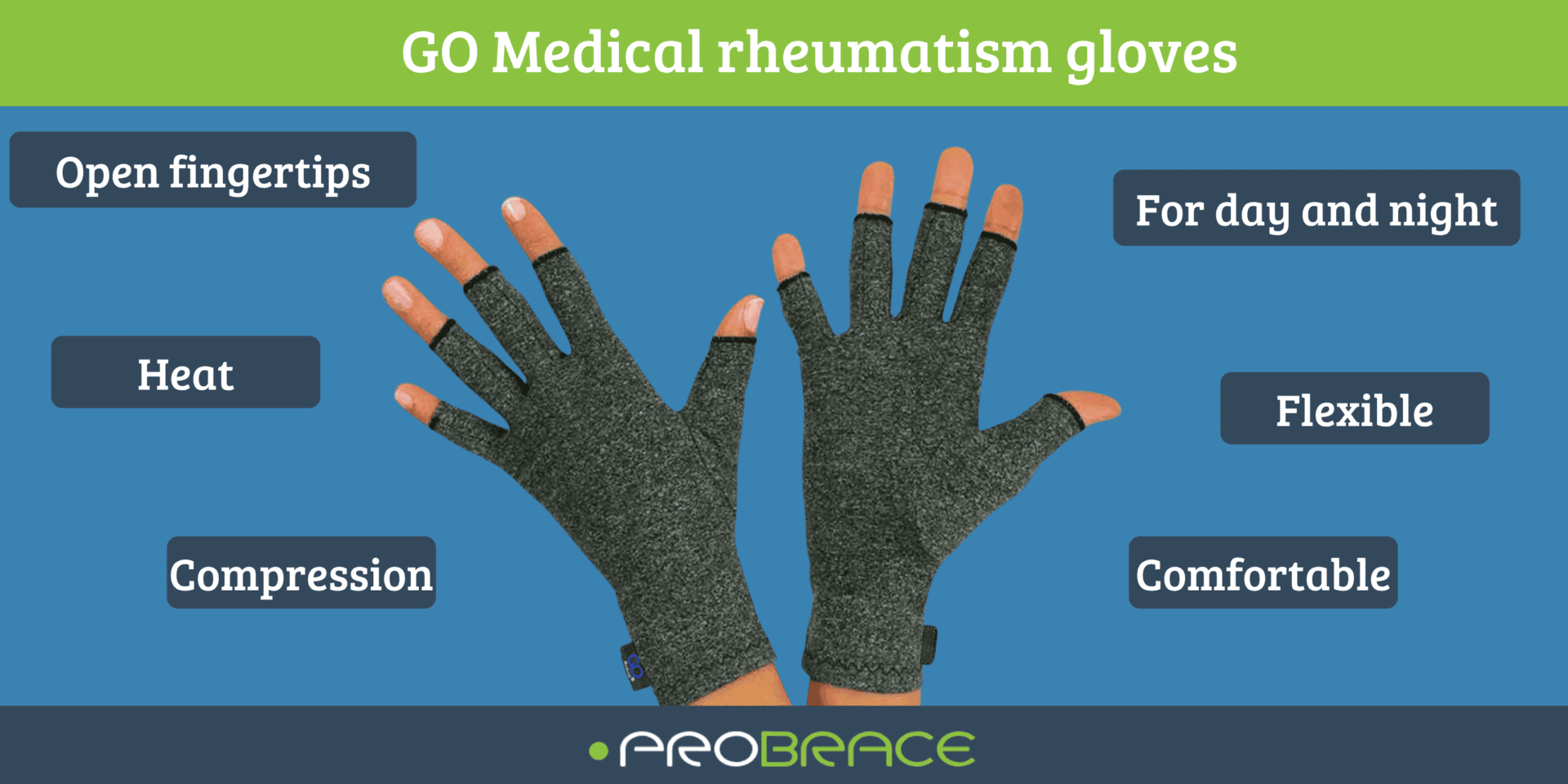
ProBrace sells GO Medical arthritis gloves. These gloves provide comfortable compression. The warmth may also help reduce pain in the joints and fingers. The gloves are available in versions with and without silicone grip.
Arthritis gloves with 5% spandex for effective compression
GO Medical arthritis gloves are made from a combination of 95% cotton and 5% spandex. This allows the gloves to provide comfortable compression. They also provide warmth and support, which may be pleasant for rheumatic complaints.

GO Medical arthritis gloves with non-slip grip
One of the features of these compression gloves is the non-slip grip, which provides additional grip during everyday tasks such as holding objects. This may make daily activities easier to perform.
Suitable for wearing during the day and at night
The gloves can be worn both during the day and at night, depending on your needs and the recommended use. Wearing them at night may help keep the hands warm and may be comfortable in cases of pain and stiffness.

Open fingertips for easier gripping
The arthritis gloves feature open fingertips. This allows you to carry out everyday tasks without having to remove the gloves. The design provides additional freedom of movement for activities such as typing or holding objects.
Sources